Hello everyone and welcome back to the Matthew Schreiner Podcast. And I apologize, I took two weeks of from making videos. I took Easter Week off, and then the following week, since I was out of town. I also apologies that this weeks episode came out a day late as well. But the topic of this episode is Easter, multiple things about Easter. Easter is not only a day. In fact the joy of Easter, the actual solemnity goes on for an entire week, called the Easter Octave. All of the eight days, from Easter Sunday to Low Sunday, White Sunday, Quasi-modo Sunday, or Divine Mercy Sunday, or the First Sunday After Easter, is the last day of the Easter Octave. But besides Easter Week, the Easter Season goes on for fifty more days, concluding with Pentecost. Pentecost is the official end to Easter.
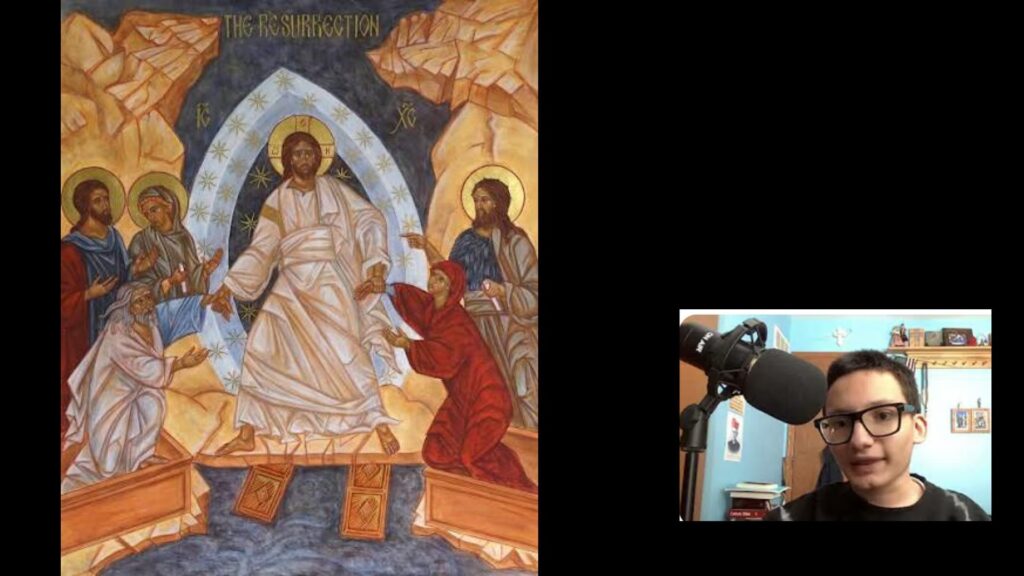
I think most understand what Easter is, the Resurrection of Jesus. On the Third Day, following Jesus’s death on Good Friday, the Tomb where Jesus was buried was empty, he rose again, appearing to his disciples and apostles. For fifty days after, Jesus appeared to his apostles and disciples, until he Ascended into Heaven.
The Sunday after Easter we read of Thomas. Thomas hears what the Disciples have to say, that Jesus is raised from the dead. But he doubts, because he did not see it. I want to give a bit of a reflection on the story of Thomas. Many of us are like Thomas, we may believe in God, even though we have never seen him. We may believe in the resurrected Jesus, even though we have not seen him. We have great reason to believe in God and in Jesus’s resurrection. But many of us are still like Thomas. We expect of God great signs, great wonders, when we pray, we hope and expect great signs, and even request that he talk directly to us. But this is not how God works. We should fulfill these words of Christ, “Blessed are they who do not see but believe”. Though we have not seen God, though we have not seen Christ, yet we still believe.
Even to this day, Christ does not leave us alone. He did not leave his Apostles alone. When all seemed desolate and at the end, Christ came again. And he visited his Apostles. And even when this had happened, he had another plan for his disciples. And we celebrate this at Pentecost. It is when Christ left to his Apostles the Holy Spirit, the Paraclete. And to this day, we are not alone.
Our priest shared this story of how when he was in Jerusalem as a seminarian, when he visited the Holy Sepulcher, where Jesus was buried, he saw the empty tomb, where Jesus was buried. And like the Disciples, the words ring true, “he is not here”. But where is Jesus? The answer came to the young seminarian, he is not far, he was near in the tabernacle of the near-by Catholic chapel. Jesus remains present in his church today.
Another point often made, Jesus meets us where we are at. Jesus met the apostles where they were hidden in fear. But from this fear, he brought them, drew them out and strengthened them. Still today, Christ meets us where we are at, and draws us further, to new and great heights. The true heights he calls us to truly is heaven. Christ draws us to the greatest we can imagine, heaven and the resurrection, he calls us to new life. Christ brings us to new life, and at the end of time he brings us to a promised Resurrection.
I will also offer you another reflection I was shared, regarding Quasi-modo Sunday. This comes from the introit or entrance antiphon of the mass (in both forms), which is: As newborn babies, alleluia, desire the rational milk without guile. (Please note that there exists different translations, and this is not the official translation used in the missal).
The church provides us once again with vivid imagery. Most especially the vivid image of how man is to desire God. One should be reminded of the words of Christ that one must become like a little child. A newborn desires very little besides food, so, as a child desires nourishment, so must man desire to have knowledge, and that knowledge the church is referring to is the knowledge of God. The church does not see the knowledge of God as contradictory to reason or rationality.
St Augustine reminds us that the desire for God is ingrained within the very depths of humanity: you have made us for yourself, O Lord, and our heart is restless until it rests in you. Man desires God, and as we have discussed, God desires man, God meets man where he is at, as we have said.
Divine Mercy is not a new concept. Divine Mercy, after all, is at the core of the mystery of the Crucifixion. It was out of God’s love, and mercy is an interesting word, and I wish I could remember the explanation that I believe Bishop Barron gave in, I believe, Introduction to Prayer, about the word mercy and I believe it’s etymology in Latin. Unfortunately, I can’t remember the specifics.
Lastly, I want to discuss the most recent Sunday and the Journey to Emmaus. Not the podcast by Scott Hahn, but the account read this Sunday. The Apostles meet a man on their way, and this man is new, and they recount Jesus. And then this man recounts all about how to prophets foretell Jesus. They ask this man to stay. And the man goes and breaks bread, their hearts burn within them, and in the breaking of bread, Jesus is revealed to them. Even today in the breaking of the bread at mass, within the Eucharist, Jesus is revealed to us.
Easter is one of the most important seasons of the church, for it is in this time that the church recalls her Lord’s resurrection. We have discussed three weeks of Easter, that is, the Sunday readings and what they signify. The church speaks of true moments that happened in the life of the apostles and of the early church. While they are clear to us, these events truly unfolded in the lives of the apostles. We do not speak of some figurative Resurrection, and we do not speak of stories, all these events happened. And still today they are signified within the church.
Leave a Reply