
Hello everyone and welcome back to the Matthew Schreiner Podcast. I apologize for the lack of episodes last week. I was sick last week and unable to make an episode on Monday. Regardless, this episode will continue to look at the readings from Sunday. I intended to do a look last week at the readings on last Monday’s episode, and I actually thought it was a very good episode, even though I never finished writing it, but I was looking forward to finishing the script and recording it, and I thought it gave a very good look at the readings, of both the ordinary and extraordinary forms.
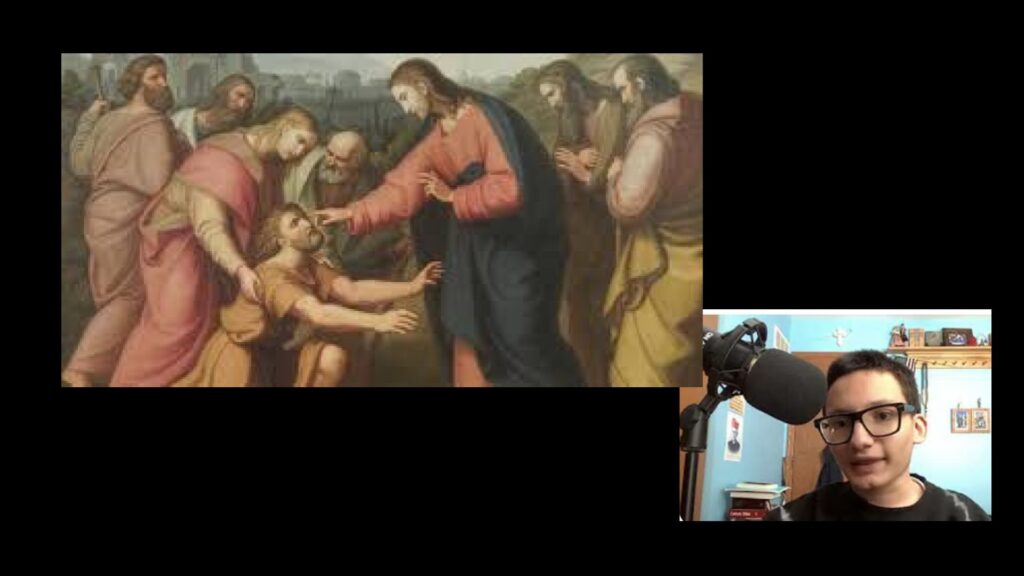
In this episode we will be solely looking at the readings from the Ordinary Form. The gospel of the Ordinary Form is rather long. Let’s work through the Gospel. We begin with a man born blind, and the disciples ask how is it that this man is blind, has he or his parent’s sinned. Why is it that evil has befallen this man, that he has not his sight. Is it something he has done or his parent’s? This was the belief that suffering was punishment for some kind of evil done. And Jesus answers that it is not because of sin that this man is blind, but so that the Glory of God may be seen through this man.
And then Jesus spits in the dirt and makes clay and smears it over the man’s eyes, and tells him to wash in the Pool of Siloam. Pope Benedict XVI in his book Jesus of Nazareth, points out that Sent is a name of Christ, and therefore in this story Jesus is telling the man to wash in the water of Christ. We can take this symbolically, that we are meant to wash in the water of Christ, that we are made clean by Christ, in the water that he has sent, the water that came forth from his side. If we wish to look at it in such a way. After the man washes, he is able to see.
They bring the blind man to the Pharisees, and there now is a dispute amongst the Pharisees, since it is the sabbath, is what Jesus did of healing this man alright, According to some, he is not of God because he does not keep the sabbath, according to others how can a sinful man do such signs. I am reminded of a similar yet different story, when the Jews accuse Jesus of doing his works by the power of the devil. In both these cases we can easily reprove these, are Jesus’s works for the good? Then how can they be of anyone but God?
The pharisees do not believe that this man has been healed. So they go to the man’s parents. These man’s parents do not wish to themselves give word for or against Christ, so instead they say, we know he has been born blind, but know not how he sees, but, he is grown, you can ask him for yourself.
So they ask the man again, and the pharisees are obstinate that Jesus did not do it. And he claims himself to be a disciple. And when the pharisees retort back that they do not know how Jesus has done his works, the man retorts: “This is what is so amazing, that you do not know where he is from, yet he opened my eyes. We know that God does not listen to sinners, but if one is devout and does his will, he listens to him. It is unheard of that anyone ever opened the eyes of a person born blind. If this man were not from God, he would not be able to do anything.”
Then we are told the man is thrown out, and Jesus meets him, and he reveals to him that he is the Son of Man, and that he “came into this world for judgment, so that those who do not see might see, and those who do see might become blind”
Let’s put this in context with what Paul writes in the epistle to the Ephesians that was also a part of the readings: “Brothers and sisters: You were once darkness, but now you are light in the Lord. Live as children of light, for light produces every kind of goodness and righteousness and truth. Try to learn what is pleasing to the Lord. Take no part in the fruitless works of darkness;”
We can understand this in what Christ has said before: you are the light of the world, let your light shine before man, that they may see your good works and give glory to your heavenly Father. Christ here calls himself the light of the world in the beginning of this story. He says that this work that he does, of healing the blindness of this man, is done so that “the works of God might be made visible through him”.
Jesus not only tells us that God is the one who this work is done, but we are also made to understand that, according to the Pharisees, that this work is either of God or not.
Thus we are brought back to a fundamental question, who is Christ? We are reminded of C.S. Lewis’s trilemma, that Christ is either Lord, Liar, or Lunatic. By what authority is it that Christ does his works? Is he faking these works? Is he lying?
But ultimately Christ’s authority is from God. He teaches us this, and he makes his identity rather clear in this story. Christ is not just another prophet. Rather he is the Son of Man, someone who is capable to doing great works no one else thought possible. That is who Christ is.
Just as Christ is the light of the world, he asks us to be the light as well. This is what Saint Paul too asks of us, that we not be and do the works of the dark, but rather be of the light, and do works of light. We are called to live as children of the light, producing every kind of good, righteousness, and truth, do what is pleasing to God. We are called to fruitful works, not fruitless works of darkness.
Like Christ, we are called to do good works, the works of God. We are called to do good works, works that make Christ present to the world. We are called like Christ to be a shining light, we are called to let our good works shine before the world.
Leave a Reply